How do I eat well and cheap on a tournament weekend?
Plan three things: breakfast at the hotel if it is included, lunch and snacks from a cooler stocked at a grocery store, and one or two restaurant dinners you pick on purpose. Restaurants are where the budget leaks, and the price data says they are getting worse relative to groceries.
The U.S. Department of Agriculture's Economic Research Service reports that food-away-from-home prices were 3.4 percent higher in August 2026 than a year earlier, while food-at-home prices were 2.2 percent higher. It forecasts 3.5 percent for restaurants in 2026 and 2.4 percent for groceries. Those are inflation rates, not price levels, so they do not say a restaurant meal costs a specific amount more. But the direction is clear. Every meal you move from a menu to a cooler is a meal exposed to the slower increase.
Where does the money go on the road?
Food is the line most parents guess at. When we build a weekend budget, it is usually the one that surprises people, because it is spread across a dozen small purchases. Our trip cost calculator has a meals line you can set yourself, and our travel sports cost report covers the wider picture. We did not find a reliable national figure for per-day food spend on a tournament trip, so we do not give one here. Count your own family and your own habits.
The practical goal is simple. Spend on the meals that matter for performance (the one before the first game, the one after the last), and keep the rest cheap and boring.
What should my kid eat before, between, and after games?
The American Academy of Pediatrics, through HealthyChildren.org, has the most specific guidance we found, and it is written for busy families.
| When | What the AAP page says |
|---|---|
| 3 to 4 hours before | Mostly carbohydrates with a moderate amount of protein, low in fiber and fat |
| Before exercise (70 lb child example) | Around 8 to 10 ounces of water 2 to 3 hours before, plus 6 to 8 ounces just before |
| During play | A small amount of fluid, 3 to 4 ounces, every 15 minutes |
| Between games | Snacks that pair a carb with protein, such as half a sandwich on whole grain bread or a hard-boiled egg |
| After play | Refuel within 30 to 60 minutes with carbohydrates and protein. Chocolate milk is named as an excellent option |
The same source says water is enough for activity under an hour. For longer events or hot conditions, sports drinks help replenish carbohydrates and electrolytes, and it says energy drinks are not the same thing, since they contain caffeine and excess sugar.
It also gives a menu tip worth stealing. Steer away from items described as fried, au gratin, crispy, escalloped, pan-fried, sauteed or stuffed. Those words flag high fat and calories. Grilled, baked and roasted are the safer picks, and a sandwich shop beats a drive-through line on game day.
How do I pack a cooler that is actually safe?
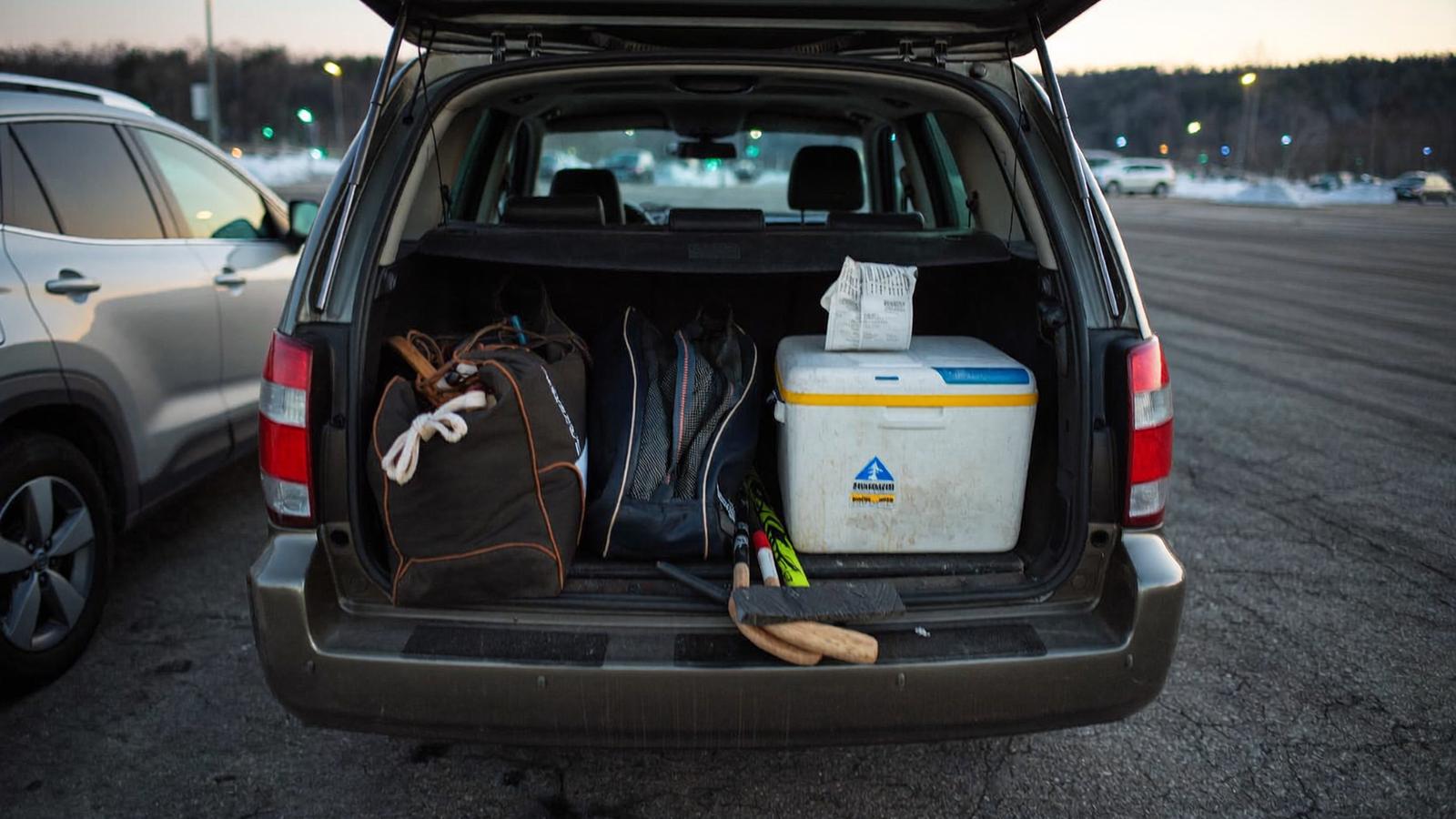
Use two, and follow the clock. The FDA's outdoor eating page says to place cold food in a cooler with ice or frozen gel packs and keep it at 40 degrees F or below. It adds that food should not sit in the danger zone, 40 to 140 degrees, for more than 2 hours, or 1 hour if it is above 90 degrees outside.
The FDA also suggests packing beverages in one cooler and perishable food in another, so the food stays closed while drinks get refilled. And it says meat, poultry and seafood can be packed while still frozen, so they stay colder longer. If you bring raw meat, wrap it so it cannot drip onto ready-to-eat food.
A sideline cooler checklist:
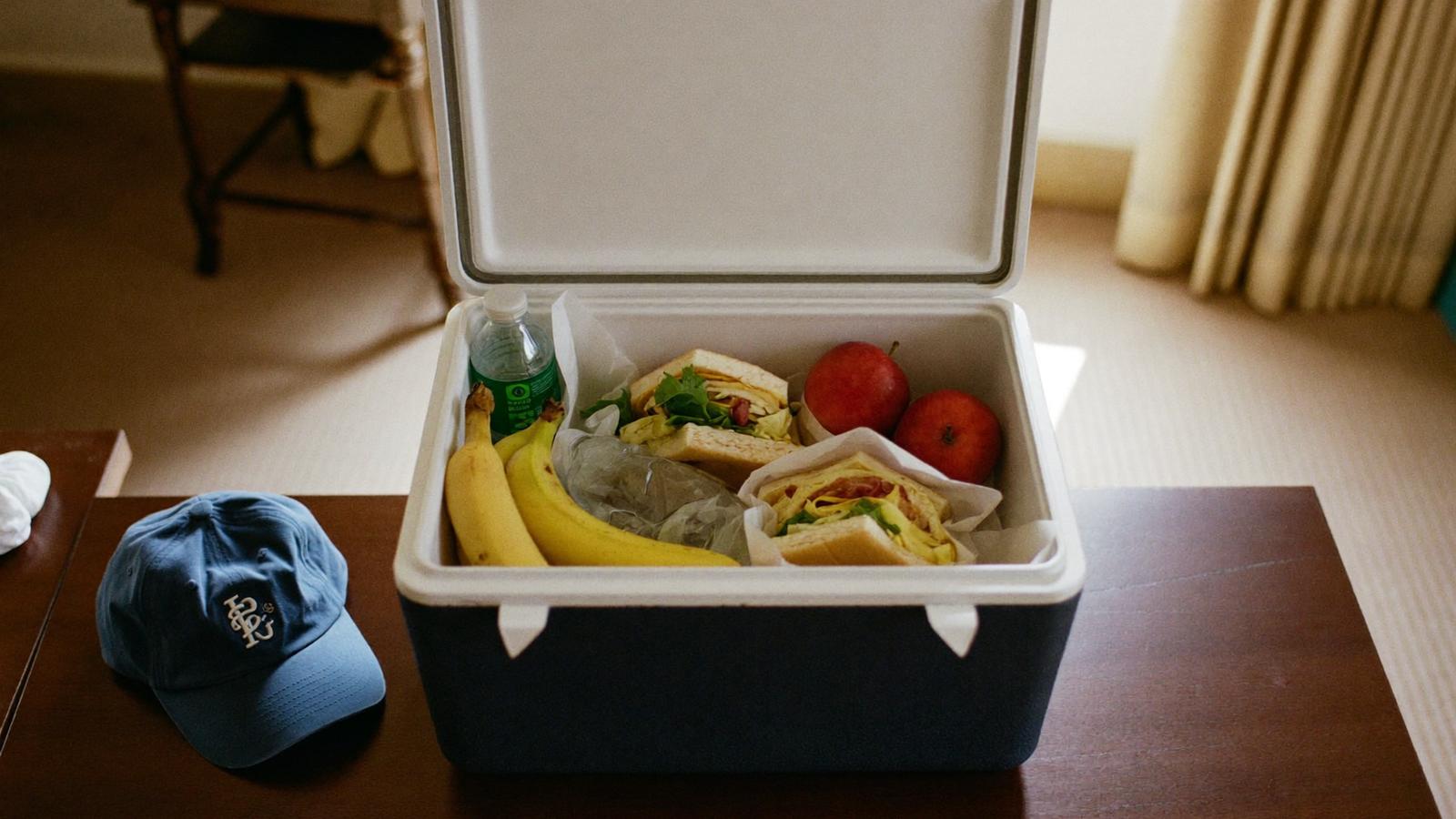
- Sandwiches, fruit, hard-boiled eggs, and whatever else your kid reliably eats
- Frozen gel packs or ice, packed so the cooler is full
- A second cooler or bag for water bottles and drinks
- Napkins, wipes, a small trash bag
- A watch. Two hours goes faster than you think on a turf field in October sun
If a hotel room has a refrigerator, move the perishables there at night. If it does not, ask the front desk before you assume.
Is the hotel breakfast worth planning around?
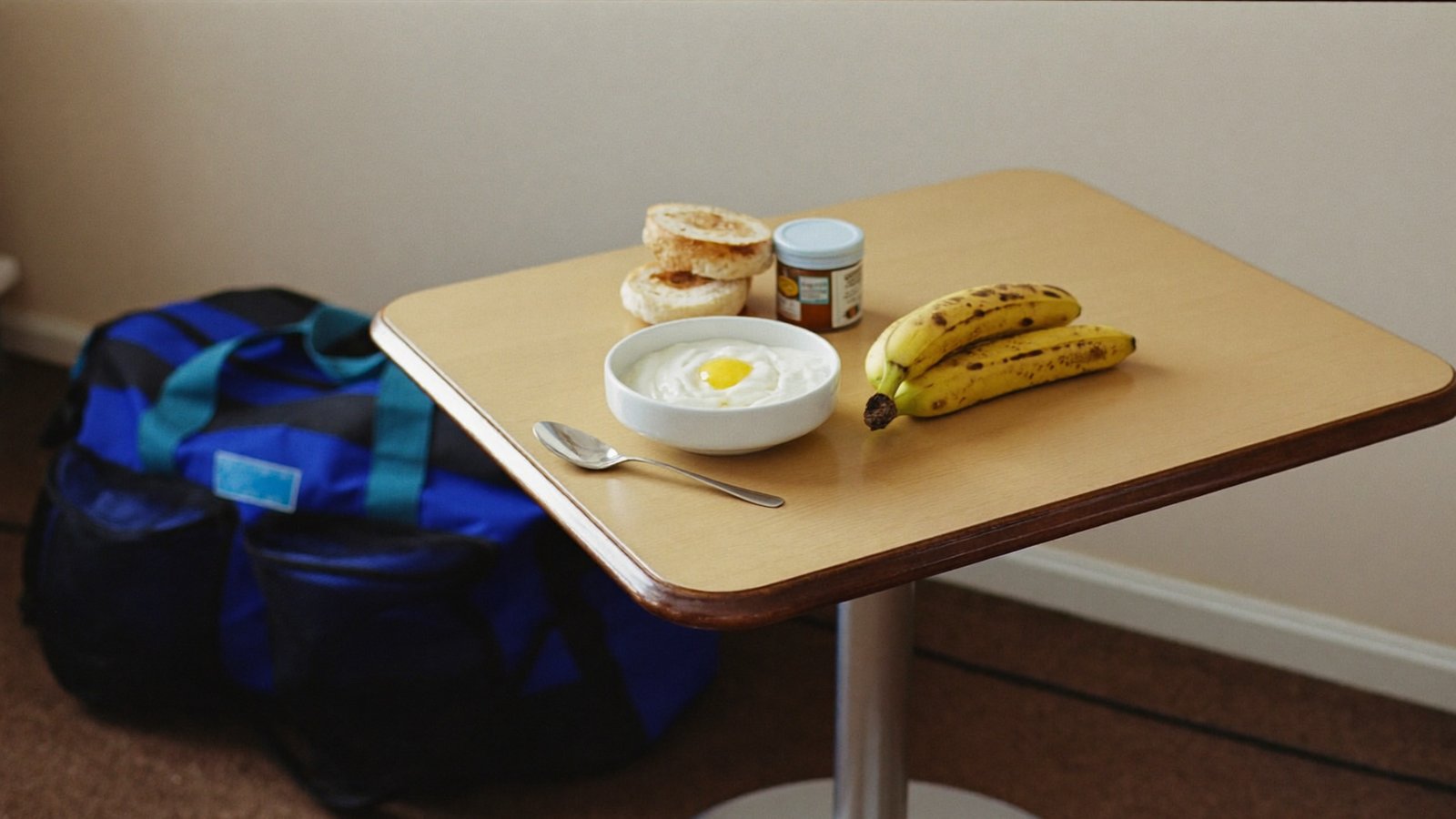
If it is included, yes. Hampton by Hilton, for one, says on its fact sheet that it was "the first to believe guests should wake up to a free hot breakfast," and lists waffles, eggs, bacon, yogurt, oatmeal, cereal and fruit. That is a single brand's description of its own product. Other brands and individual properties differ, and some charge. Confirm what is included before you pay for a room, and note the breakfast hours against your first game.
Here is where tournament rules come in. If your event requires booking through a housing partner, your choices may be limited to the hotels in its block. That makes breakfast a fair question to ask the housing contact before you book, not after. Our guide to reading a housing policy lists what to look for, and our stay-to-play report shows how common these rules are.
A breakfast that is included also changes your math on the whole stay. A room that costs a little more with a hot breakfast for four may beat a cheaper room plus a drive-through. Run both numbers in the cost calculator and compare.
Does grocery pickup save money on a tournament weekend?
It can, mostly by saving time and curbing impulse buys. The Penny Hoarder's 2026 roundup says most major chains want roughly a $35 minimum for free pickup, that Target and Publix have no minimum, that Kroger charges $4.95 under $35, and that you generally do not tip for curbside pickup. It also says to compare unit prices and check substitution policies so you do not end up with pricier replacements.
For a team weekend, the usual play is to order pickup at a store near the hotel on the drive in. Stock the cooler, then fill a bag with shelf-stable snacks. A few tips:
- Order the night before and pick a window that fits your first game, not your hunger.
- Buy the sandwich ingredients, fruit, snacks and water as one order, and share it with another family if you are traveling together.
- Turn off substitutions for anything your kid won't eat.
- Check the current fees on the store's own site. Terms change, and we could not confirm any one chain's current rules from its own page.
What if the hotel has a kitchen?
Some suite-style hotels advertise in-room kitchens or kitchenettes. We did not find an official brand page to cite for what any given property includes, so check the room description on the hotel's own site and call if it is not listed. A kitchen lets you cook one meal instead of buying one, which matters most for a large family.
If you are in an event's required hotel block, ask the housing contact which room types are in the block. Do not assume a kitchen suite is available at the block rate.
What do I do about restaurant dinners?
Pick one night, and pick it ahead of time. Look for places near the hotel that will seat a big group without an hour's wait, since a team dinner at 6 p.m. on a tournament Saturday is a crowd. Use the AAP menu words above to choose, and share entrees if portions are large.
Treat a doggy bag like anything else in the cooler. The FDA's 2-hour and 1-hour limits above are written for outdoor eating, and a warm car is a fair stand-in. Get it into the fridge or the cooler fast.
What does a sample weekend food plan look like?
Here is one way to lay it out for a three-night trip. It is a template, not a menu, and the timing comes from the sources above.
| Slot | Plan |
|---|---|
| Friday arrival | Grocery pickup on the way in. Stock the cooler and the hotel fridge if there is one |
| Each morning | Hotel breakfast if included, otherwise cereal, fruit and yogurt from the pickup order |
| 3 to 4 hours before game one | Mostly carbohydrates with some protein, low in fat and fiber |
| Between games | Half sandwiches, fruit, hard-boiled eggs, water. Sports drinks only on longer or hotter days |
| Within 30 to 60 minutes after the last game | A carb and protein snack, such as chocolate milk |
| One evening | The planned restaurant dinner, chosen from the grilled and baked end of the menu |
| Every day | Check the clock on the cooler. Replace ice before it melts |
Tell your team manager if you are traveling with another family. Splitting one pickup order and one cooler is the cheapest meal plan we know of, and it takes one text message to set up.
Check your tournament
Before you book, look up your event in our tournament finder to see its housing rules, and browse tournaments with no hotel requirement if you want freedom to pick a hotel with breakfast or a kitchen. Then pack the cooler, set up the pickup order, and save the restaurant night for when it counts. For a full gear list, see our youth hockey tournament packing list or the soccer tournament weekend checklist.
Frequently asked questions
How do I keep food safe in a cooler at a tournament?
The FDA says to keep cold food at 40 degrees F or below using ice or frozen gel packs, and not to leave food between 40 and 140 degrees for more than 2 hours, or 1 hour if it is above 90 degrees outside. It also suggests one cooler for drinks and another for perishable food, and keeping coolers closed.
What should kids eat between tournament games?
The American Academy of Pediatrics says snacks that pair a carbohydrate with some protein work best, such as half a sandwich on whole grain bread or a hard-boiled egg. It suggests water for activity under an hour, sports drinks for longer or hotter days, and a carbohydrate and protein snack within 30 to 60 minutes after.
Is grocery pickup cheaper than eating out on a tournament weekend?
Usually, yes, because USDA data shows restaurant prices rising faster than grocery prices. Pickup has its own rules, though. One 2026 roundup says most major chains want roughly a $35 minimum for free pickup, and Target and Publix have none. Check the store's current terms before relying on it.
Does the hotel breakfast count as a real meal for a team weekend?
It can. Hampton by Hilton says it was the first brand to offer guests a free hot breakfast and lists waffles, eggs, bacon, yogurt, oatmeal, cereal and fruit. Policies vary by brand and property, so confirm what is included when you book. If the tournament assigns your hotel, ask what breakfast comes with it.
What foods should athletes avoid on game day?
The AAP says to steer clear of menu items described as fried, au gratin, crispy, escalloped, pan-fried, sauteed or stuffed, because they signal high fat and calorie content. A pre-game meal 3 to 4 hours out should be mostly carbohydrates with moderate protein, and low in fiber and fat.
Check your tournament
Look up the housing rule for the event your team is entering, with the rule quoted and the date we checked it. Or start with the tournaments that let you book any hotel.
Sources
- FDA: Handling Food Safely While Eating Outdoorsfda.gov · checked Oct 14, 2026
- HealthyChildren.org (AAP): Sports Nutrition for Busy Familieshealthychildren.org · checked Oct 14, 2026
- USDA Economic Research Service: Food Price Outlook, Summary Findingsers.usda.gov · checked Oct 14, 2026
- Hampton by Hilton fact sheetstories.hilton.com · checked Oct 14, 2026
- The Penny Hoarder: Grocery Pickup, How It Works, Costs and Ways to Savethepennyhoarder.com · checked Oct 14, 2026