What goes on a travel baseball tournament packing list?
Pack in four bags: a player bag, a parent bag, a cooler, and a hotel bag. The player bag is the easy one. The other three are where weekends go wrong, because tournament baseball means long gaps between games, little shade and weather that does not care about the schedule.
The rest of this article gives you the tables, plus the sourced guidance on heat, sun, lightning and food. Softball families can use the same lists. We cover the differences in the FAQ. If you want the hockey version, see our youth hockey tournament packing list.
The printable checklist: bag by bag
Print this and tape it inside the trunk.
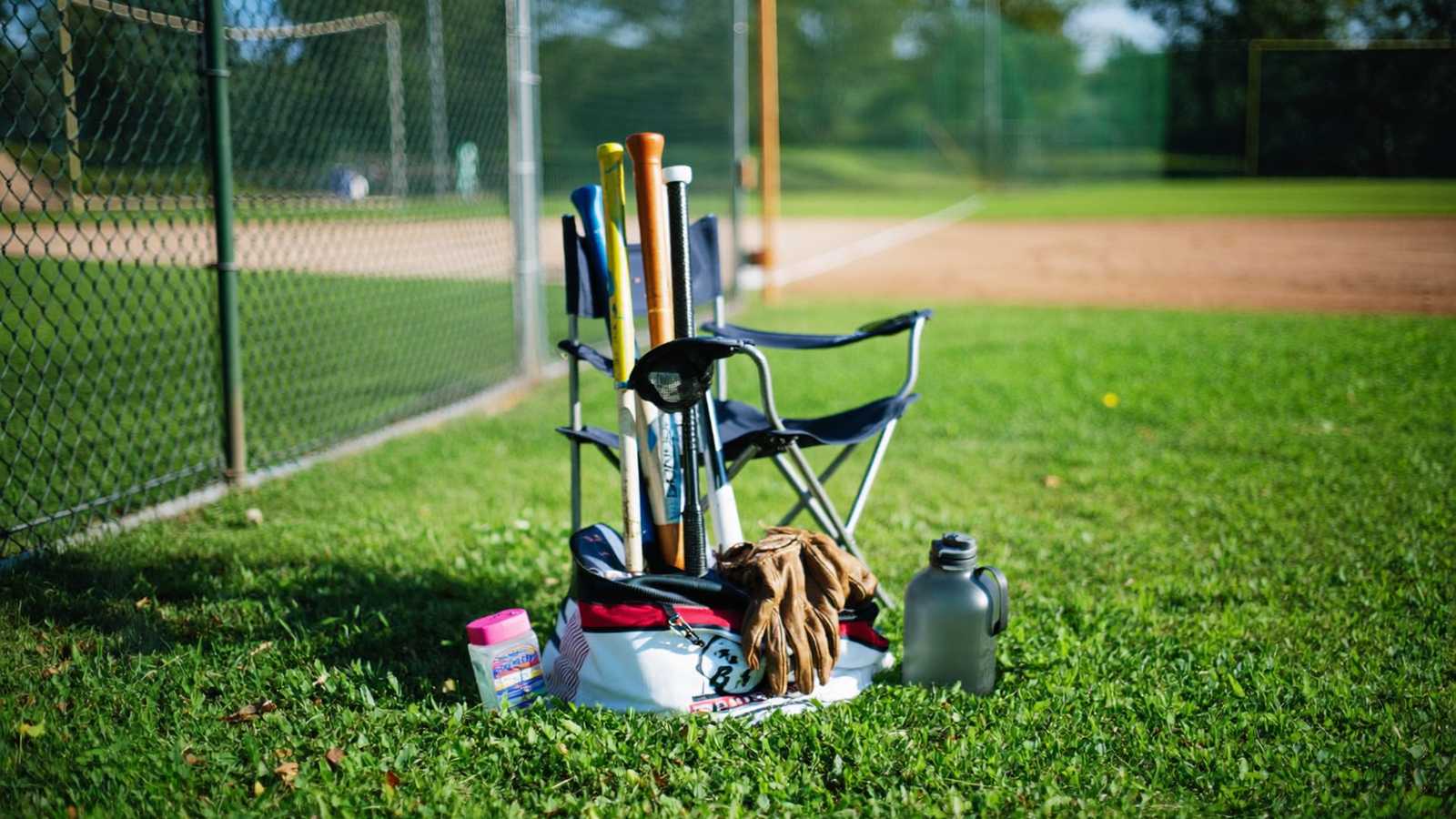
Player bag (goes to the field every game)
| Item | Notes |
|---|---|
| Glove, bat, helmet, cleats | Check your tournament's bat rules before you leave |
| Two uniforms or jerseys per day if the team allows | Ask the coach what the team requires |
| Extra socks and a second pair of shoes | A wet field makes dry socks the best item in the bag |
| Hat, sunglasses | See the sun section below |
| Labeled water bottles | Two per player if you can |
| Sports towel or small cold towel | Wet one down for the neck between games |
| Batting gloves, eye black, tape | Small zip bag |
| Sunscreen | Applied before the first game, not after the second |
| Snacks that survive a hot bag | Nuts, pretzels, fruit, granola bars |
Parent bag (rides to the complex)
| Item | Notes |
|---|---|
| Pop-up canopy with weights | Check the complex rules. Some fields ban them or limit size |
| Folding chairs | Carry two if you can. Some fields have very little seating |
| Blanket or tarp | For wet grass or a wet bleacher |
| Rain jacket or poncho | A trash bag works in a pinch |
| Hat, sunscreen, sunglasses | Parents burn too |
| Printed schedule and field map | Complexes are large and phone service can be weak |
| Power bank | Livestream and score apps drain a phone |
| Cash and cards | Concession lines, parking and gate fees |
| Bug spray | Evening games near grass or water |
| Small first aid kit | Bandages, tape, gauze, the medicine your child already takes |
Hotel bag (stays in the room)
| Item | Notes |
|---|---|
| Laundry pods, mesh bag | Rinse socks and sliding pants at night |
| Drying line or a spare hanger set | Red clay does not wash out if it dries on |
| Plastic bags | Separate wet and dirty from clean |
| Chargers and a power strip | Outlets near the beds are scarce |
| Pajamas and clean clothes | Shoes you can wear to dinner |
| Pillow from home | Optional |
How much water do kids need at a baseball tournament?
More than they will ask for. Little League tells parents that players should drink "at least eight (8) ounces of water or Gatorade drink at least every 15 minutes" in hot, humid weather, and that thirst is an early sign of dehydration. A Memorial Hermann sports medicine page puts it a little wider: children may need "as much as 8 ounces of fluid every 15 to 20 minutes", depending on age and weight.
Do the math for a doubleheader. If your child plays two games in the heat, one water bottle will not cover it. Bring a cooler of water, not a single bottle per kid.
The American Academy of Pediatrics offers a useful reassurance. As Healio reported on the AAP council's guidance, studies of children ages 9 to 12 found temperature regulation and exercise tolerance comparable to similarly conditioned adults when exertion was controlled and dehydration was prevented. The same guidance stresses gradual acclimatization and adjusted schedules in high-risk weather. The point for a tournament weekend is that kids from a cool climate arriving in a hot one are the ones to watch.
Know the warning signs. The Memorial Hermann page lists heavy sweating, dizziness and confusion, nausea, headache and pale, moist skin as signs of heat exhaustion, and says the child should stop, sit or lie down, and cool off with fluids and cold towels or ice bags. If you are unsure, find the coach and the tournament's first aid staff.
What sun protection should I pack?
The CDC says that when the UV index is 3 or higher, you should stay in the shade, wear clothing that covers arms and legs, wear a wide-brim hat, wear wraparound sunglasses that block UVA and UVB, and use a broad-spectrum sunscreen with SPF 15 or higher. Little League adds that sunscreen should be applied before games, even under uniforms, and reapplied frequently because sweat washes it away.
A baseball cap covers the face but leaves ears and the back of the neck. Put sunscreen there. This is the spot parents miss most, and it is the spot CDC names.
What do I do in a rain or lightning delay?
Know the rule before the sky turns. The National Weather Service says people should wait at least 30 minutes after the last thunder before resuming outdoor activities. Little League says the same: wait at least 30 minutes after the storm. It also repeats a rhyme you may know: if you hear it, clear it.
The NWS also says where not to go. "Small outdoor buildings including dugouts, rain shelters, sheds, etc., are NOT SAFE." A substantial building with wiring and plumbing is best, and a hard-topped metal vehicle with the windows closed is acceptable. So the car is your shelter. Park where you can get to it.
Two more planning points from NWS: a significant lightning threat reaches roughly 6 to 10 miles from a storm, and organizations should name a person to watch the weather who is not the coach or umpire. At a tournament, that means knowing where the director posts the weather policy, and which app or text alert the event uses. Look for it before game one.
For the delay itself, pack:
- A change of dry socks and a dry shirt for the player.
- A towel for the bench and the car seat.
- A card game or a book.
- Snacks that do not need refrigeration.
- A plastic bin or trash bags to keep bats and gloves off the wet ground.
If the schedule slides, ask the director or your team manager how the delay affects later games. Do not assume. Pool play can be shortened or reordered, and each event has its own policy.
How do I pack a cooler for tournament day?
Two coolers beat one. The FDA suggests packing beverages in one cooler and perishable food in another, so the food does not sit in warm air every time someone grabs a drink.
The FDA's numbers are simple:
- Keep cold food at 40 degrees F or below.
- Do not let food sit between 40 and 140 degrees for more than 2 hours.
- Make that 1 hour if the outside temperature is above 90 degrees F.
- Use ice or frozen gel packs.
A cooler in a hot car trunk while you sit through two games counts. If lunch will be out for more than two hours in July, it should not be a deli sandwich. Pick shelf-stable food: peanut butter sandwiches, fruit, pretzels, jerky, trail mix. Freeze water bottles to serve as ice, then drink them as they melt.
Check the complex's rules before you roll in. Some venues limit outside food or glass. We cannot tell you each park's rule, so ask the director or read the event page. For more on eating well on the road, see tournament food on the road.
What should I pack for a full weekend away from home?
Add the hotel bag and the car kit. Before you book a room, check whether the tournament has a housing requirement. Some events send teams to a required hotel list, and the terms (cancellation, minimum nights) can matter if rain cancels games. Our guide to reading a housing policy and our stay-to-play guide show what to look for. To see what a weekend adds up to, use the trip cost calculator.
A rain-out is the case people forget. If games are cancelled and the hotel is non-refundable, you are the one holding the bill. Read the cancellation terms first. We go through this in tournament hotel cancellation policy.
Costs add up fast. The Aspen Institute's 2025 Project Play report, as reported by Spectrum News, found American families spent an average of $1,491 on one child's sports activities, and the article cites a 46 percent rise since 2019. That figure is for all activities, not travel ball alone. Our cost breakdown goes deeper.
What should I do the night before?
- Read the tournament's rules page and the field map.
- Match the bags to the tables above.
- Charge phones and the power bank.
- Freeze water bottles and gel packs.
- Check the forecast and the weather policy. Pack rain gear even if the forecast looks clear.
- Confirm your hotel booking, check-in time and cancellation terms.
- Put the printed schedule in the parent bag.
Check your tournament
Before you book, look up the event in our tournament finder to see its housing rules, and browse tournaments with no hotel requirement. Then pack once, and check the weather policy before you leave the driveway.
Frequently asked questions
What should I pack for a travel baseball tournament weekend?
Start with the player bag (gear, spare socks, water), then a parent bag (canopy or chairs, sunscreen, hat, cooler, towels, rain gear) and a hotel bag (drying line, charger, laundry pods). Add a printed schedule, since cell service at big complexes can be poor. The tables in this article cover each bag.
How long is a lightning delay at a baseball tournament?
The National Weather Service says to wait at least 30 minutes after the last thunder before resuming outdoor activity. Little League gives the same 30-minute guidance. Tournament directors set the final call, so ask where the event posts weather rules. Dugouts and open shelters are not safe, but a closed car is.
How much water should a kid drink during a baseball tournament?
Little League says players should drink at least 8 ounces of water or a sports drink every 15 minutes in heat. A Memorial Hermann sports medicine page says children may need as much as 8 ounces every 15 to 20 minutes depending on age and weight. Do not wait for thirst.
Can I bring a cooler to a baseball tournament?
Usually yes at outdoor fields, but rules vary, so check the event page or ask the director. The FDA says to keep cold food at 40 degrees F or below and not leave it out more than 2 hours, or 1 hour above 90 degrees F. Use a second cooler for drinks.
Is the packing list different for softball?
Mostly no. The heat, sun, lightning and food advice is the same. Swap in softball-specific gear (glove, bat, helmet and face guard if your league requires it) and check the tournament rules for bat and equipment standards. We did not find one national rule list, so read your event's page.
Check your tournament
Look up the housing rule for the event your team is entering, with the rule quoted and the date we checked it. Or start with the tournaments that let you book any hotel.
Sources
- Little League: Staying Safer in Unsafe Weatherlittleleague.org · checked Oct 14, 2026
- National Weather Service: Lightning Safety for Sports and Outdoor Activitiesweather.gov · checked Oct 14, 2026
- CDC: Preventing Skin Cancer (sun protection)cdc.gov · checked Oct 14, 2026
- FDA: Handling Food Safely While Eating Outdoorsfda.gov · checked Oct 14, 2026
- Memorial Hermann: Heat Illness in Young Athletes is Largely Preventablememorialhermann.org · checked Oct 14, 2026
- Healio: AAP council offers tips to beat heat-related illnesshealio.com · checked Oct 14, 2026
- Spectrum News: Youth sports rising costs (Aspen Institute 2025 Project Play report)spectrumnews1.com · checked Oct 14, 2026