How do you survive a tournament weekend with siblings?
Give every child a named adult for every block of the day, read the hotel pool rules before you unpack, and protect sleep and food like they are part of the schedule. Everything else is detail.
The player has a team, a coach and a printed schedule. The sibling has you, a phone at 9 percent and a vending machine. Most weekend meltdowns trace back to nobody being clearly in charge of the kid who is not playing. This article is a plan for fixing that, built on CDC and AAP guidance and on what event pages actually say. If you still need the gear side, start with our youth hockey tournament packing list and come back.
Who watches the siblings during games?
Decide before you leave home, not in the parking lot. We looked for a national rule on siblings at youth tournaments and did not find one. Policies live in each event's spectator page, each venue's rules and sometimes the facility's own posted signs.
One real example of how specific they can get: the 2025 Green Country Challenge, a Stoa speech and debate event (not a sports tournament, but a useful template), states "Older siblings are not considered supervising adults." The same page says younger children may play outside only with a supervising adult or parent. Your tournament may say nothing, or something stricter. Read the page, and if it is silent, ask the director or team manager.
A simple handoff system works for most families:
- Two parents: One covers the player's games. The other has the younger kids. Swap at a set time, not "whenever."
- One parent: Pair with another team family you trust, and say out loud who has whose kid and until when.
- Grandparent or sitter along: Write the schedule on one page and hand it over. Give them the room number and your cell number.
Do not leave a child "just for one game." The ten minutes that goes wrong is always the one you planned around.
What are the pool rules at tournament hotels?
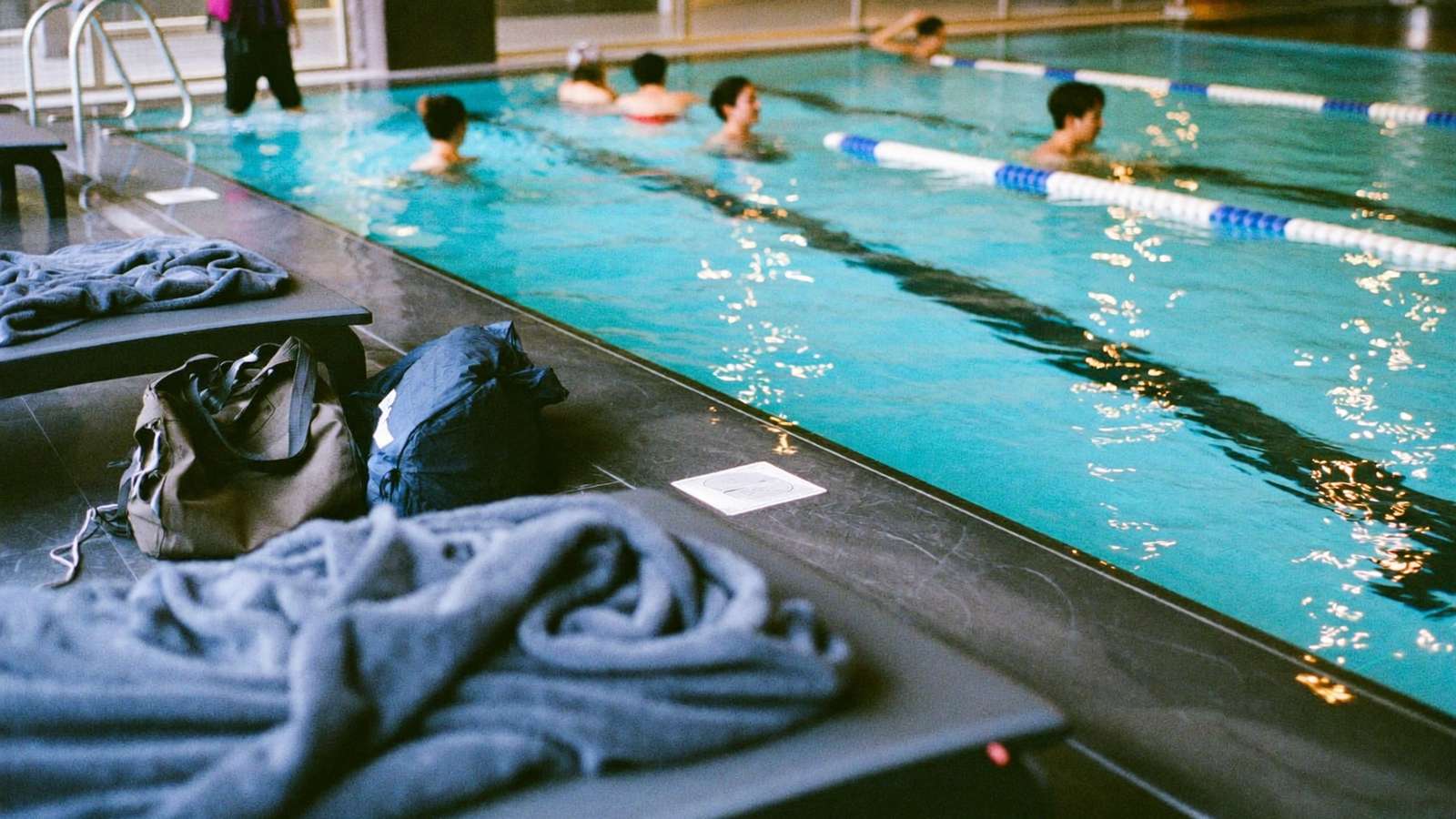
Read the posted rules at the pool gate, and ask the front desk when the pool closes and whether a lifeguard is on duty. Many hotel pools do not have one, and rules on age and adult supervision differ by property, so we will not guess what yours says.
What we can source is what the health agencies say about supervision. The CDC reports that "more children ages 1 to 4 die from drowning than any other cause of death" and that drowning is the second leading cause of unintentional injury death for ages 5 to 14, after motor vehicle crashes. It puts the national toll at roughly 4,000 fatal drownings a year, about 11 a day.
The CDC's prevention page says to "designate a responsible adult to supervise closely and constantly" when children are in or near water, and to skip distractions like phones, since drowning "happens quickly and quietly." It also says kids who have had swim lessons still need close and constant supervision.
The AAP's guidance for toddlers is tighter. It recommends staying within arm's length, "touch supervision," and suggests a "water watcher" who passes the job to the next responsible adult after a set time, such as every 15 to 20 minutes. It also says that if you need to leave the water, you take your child with you, "even if lifeguards are present."
Here is how that turns into a hotel plan:
| Situation | What the guidance supports |
|---|---|
| Toddler or non-swimmer in the water | An adult within arm's length (AAP touch supervision) |
| Several kids in the pool | One named water watcher, rotating every 15 to 20 minutes |
| Parent needs a phone call or a text to the team | Hand off the watcher role first, out loud |
| Older sibling "can swim" | Still needs an adult watching (CDC: lessons do not replace supervision) |
| Pool is crowded with other teams | Assume no one else is watching your kid |
Tournament weekends make this harder than a normal vacation. Pools fill with teams between games, parents are tired, and everybody assumes someone else has the kids. If the hotel was picked for you under a stay-to-play rule, see our guide to reading a housing policy before booking.
How much sleep do siblings need on a tournament weekend?
More than the schedule gives them, which is the point of planning. The CDC lists 10 to 13 hours (naps included) for ages 3 to 5, 9 to 12 hours for ages 6 to 12, and 8 to 10 hours for teens.
A 7 a.m. game means a 5:45 wake-up for the whole room. A 9 p.m. pool session pushes a six-year-old well past a bedtime that already shrank. You cannot protect everyone's sleep, but you can choose whose to protect first:
- Put the player's bedtime on the calendar the night before a morning game.
- Plan the pool for the afternoon gap, not after dinner.
- If you have a toddler who naps, build the nap into the day, in the car or in the room, rather than hoping.
- Bring white noise and the same bedtime item they use at home.
- Ask for a quiet floor or a room away from the elevator when you book. It costs nothing to ask.
Where rooms are scarce, be careful about sharing. Check the hotel's occupancy limit when you book (it is posted in the room details), and do not assume a block rate covers extra people. If you are pricing a second room versus a roll-away, our trip cost calculator lays out the difference.
What should I feed kids who are not playing?
Food is the other thing that falls apart. Siblings do not get a bag from the team parent, and concession lines eat the gap between games.
The AAP suggests small, frequent meals and portable foods for active kids, such as fruit, sandwiches, protein bars, hard-boiled eggs and dried fruit with nuts. The same page says children need a small amount of fluid, 3 to 4 ounces, every 15 minutes during activity. That is written for the athlete. A sibling running laps at the field needs water too.
If you pack a cooler, the FDA says to keep cold food at 40 degrees F or below and not to leave it out for more than 2 hours, or 1 hour when it is above 90 degrees. A cooler in a hot car with a juice box and a turkey sandwich counts. Some venues restrict outside food, so check the event page. More ideas are in our post on tournament food on the road.
Which hotel works best for a family with siblings?
Pick for the family you have, not the one the block assumes. A short checklist:
- Kitchenette or fridge and microwave. Saves a restaurant meal a day. Confirm in writing, not on a listing page.
- Pool hours and rules. See above. A pool that closes at 8 p.m. is a plus for bedtime.
- Breakfast included and start time. A 6 a.m. breakfast is not a breakfast if your game is at 7.
- Room layout. Suites or connecting rooms are worth asking about. Ask the price difference, then compare it to two rooms.
- Drive time to the venue. Ten minutes beats a better pool 35 minutes away.
- Laundry on site. Helps with wet gear and sibling accidents.
If the tournament requires you to book through its housing partner, the choice may be made for you. Read the policy first. If a rule seems to block a reasonable family need, you can politely ask the director whether an exemption exists. Our post on asking for a stay-to-play exemption covers what to say. To see which events have no hotel requirement, use our book-anywhere list.
When should the family split up?
Sometimes the best plan is that not everyone goes. Consider splitting for a day or the whole weekend if:
- Game times run all day and the youngest cannot nap or rest.
- The venue has no seating or shade for small kids.
- The hotel choice is limited to one room that cannot hold everyone.
- The tournament is out of town and a second room doubles the bill.
Splitting is not a failure. One parent travels with the player. The other stays home or meets up for the final day. Some families rotate who goes, so a sibling gets a "their" weekend later. Run the numbers in the trip cost calculator before deciding, because a split that saves a second room can look very different from one that saves nothing.
What goes in a sibling bag?
One bag per sibling, packed by the sibling when possible. Contents:
- A layer for the rink or a hat and sunscreen for the field
- Two snacks and a labeled water bottle
- A charged tablet or phone and headphones
- Cards, a drawing pad or a small set of quiet toys
- A change of clothes for younger kids
- A card with your number and the team name, in case they wander
For printable detail, the packing list article has the full table. For baseball and softball, see our travel baseball tournament packing list.
Check your tournament
Before you book a room, look up the event on our tournament finder to see its housing rules, and browse tournaments with no hotel requirement. Then read the spectator and facility pages, and assign every kid a named adult.
Frequently asked questions
Can siblings stay at the rink or field alone during a tournament?
Do not plan on it. Rules vary by venue and event, and we found no single national standard, so read your tournament's spectator page. Some events say outright that older siblings do not count as supervising adults. Assign a named adult to each younger child for every game block.
How closely should I watch my kids at a hotel pool?
The AAP recommends staying within arm's length of a toddler in the water, which it calls touch supervision. The CDC says to designate a responsible adult to watch constantly and avoid distractions like phones. The AAP adds that a lifeguard being present does not replace you.
How much sleep do kids need on a tournament weekend?
The CDC lists 10 to 13 hours for ages 3 to 5 (naps included), 9 to 12 hours for ages 6 to 12, and 8 to 10 hours for teens. Late pool time and early games squeeze that fast. Block out bedtime first, then fit the extras around it.
Should the whole family go to every tournament?
Not necessarily. A tournament is a bad fit for a toddler on a 12-hour day. Families often split the weekend, with one parent at the venue and another with the younger kids nearby or at home. It is a cost and sanity decision. Our trip cost calculator shows what an extra room adds.
What should I pack to keep siblings busy between games?
A separate bag for each sibling: a warm or cool layer, snacks, a water bottle, a charged device with headphones, and something quiet like cards or a drawing pad. Keep it out of the player's equipment bag so it does not get raided for tape and snacks.
Check your tournament
Look up the housing rule for the event your team is entering, with the rule quoted and the date we checked it. Or start with the tournaments that let you book any hotel.
Sources
- CDC: Drowning Factscdc.gov · checked Oct 14, 2026
- CDC: Drowning Preventioncdc.gov · checked Oct 14, 2026
- HealthyChildren.org (AAP): Water Safety and Young Childrenhealthychildren.org · checked Oct 14, 2026
- CDC: About Sleep (sleep hours by age)cdc.gov · checked Oct 14, 2026
- HealthyChildren.org (AAP): Sports Nutrition for Busy Familieshealthychildren.org · checked Oct 14, 2026
- FDA: Handling Food Safely While Eating Outdoorsfda.gov · checked Oct 14, 2026
- Stoa Hub: 2025 Green Country Challenge family supervision guidelines (example of an event sibling policy)stoahub.org · checked Oct 14, 2026